Tuesday, October 22, 2013

Israeli Business and the International Development Industry: DevTech - by Gaddy Weissman

Thanks for joining and I'm very happy to be a regular writer on the IsraelDev blog.  

This column is dedicated to getting Israeli business into the international development industry.  I'm going to address the sector from a business perspective, always trying to highlight the way for Israeli companies to get involved.

This is a growing sector, and Israeli companies, investors and entrepreneurs have every reason to profit from it.


Friday, October 18, 2013

Getting your Water Technology from Here to There - by Ornit Avidar

You can conceptualize a water product or technology and be firmly confident that this is the most efficient and advanced solution . However, this is an insufficient (and sometimes not even needed) condition to get it to the millions/billions in Africa and the bottom of the pyramid ("BOP").

  To sell your products to the BOP, you need to:

1)    Cater to the BoP's specific needs
2)    Form an Innovative package
3)    Get financing
4)    Adopt the right attitude

BoP specific needs: As always, you first need to decide who the target end-user is, what they need and what is available locally to make this feasible.
Of course, clean and easily accessible water is a primary basic need but usually the existing infrastructure in developing regions does not allow for the utilization of technology often used in the West. Thus, appropriate technology needed often needs to be:
      simple
      decentralized
      low maintenance
      low energy - where there is no water, there is usually no electricity
      low cost
You want real solutions instead of money-wasting white elephants.

Innovative packaging and models:
The right packaging incorporates many options:
      Firstly, you need to enable a different price range. If one is to keep the quality, this means no frills; many of the components essential for the West are not needed and even wasteful in Africa, smaller packaging and smaller quantity are key.
      Add social mechanisms and business models. Over 50% of water projects in Africa are not sustainable after 6 months[1]. This is seen all over Africa in the form of malfunctioning equipment, lack of maintenance, faulty or soiled filters or just plain population misuse due to lack of training and understanding. This can be solved if you add social mechanisms and business models to your technology package.
      Training programs and a maintenance package are also essential as without these the project is short-lived.
      Turn-key solutions: BoP style projects, with an operation base from which Return on Investment can be generated, is always a very sought after model by many governments and agencies in Africa.

Financing:
We need to keep in mind that the reality in Africa is that government budgets cannot cover all the costs thus requiring alternative methods of financing projects


The right attitude:
      Be creative and open to new ideas and sales techniques.
      Be optimistic and know that businesses can have a positive impact on people's lives.
      Partnerships with local partners and distributors are essential; you must have a local presence and be able to communicate with local culture.

Africans looking for Israeli technology and expertise should know certain facts about Israelis:
      Israelis are very pragmatic and often do what they can with what is available; that is one of the main advantages of working with Israelis.
      Israelis have a history of dealing with drought and lack of water, which has made them experts in this field.
      Israelis are very curious people – they often go to great lengths and to almost anywhere in the world just to see it, meaning they are very happy to travel wide and far.
      Lastly, Israelis tend to believe that there is nothing that can't be overcome.


[1] Founder of EWB, Professor Bernard Amadei, University of Colorado, USA – EWB seminar Tel-Aviv, 3 June 2012 http://www.youtube.com/watch?v=o-hE_KgLhTo
[1]

Saturday, September 28, 2013

An Israeli NGO’s Intervention in Rural Kenya uses a New Model for Community Development - by Ben Vorspan

The scene was all too familiar. There we were, a group of volunteers,  education specialists, medical students, and development professionals, installed in our plastic chairs, bewildered and bearing plastered smiles. In the dilapidated schoolhouse dozens of excited community members, namely parents of the school’s pupils, sat across from us on wooden benches, staring. The mid-afternoon quiet had set in, farmers took reprieve from the 3 o’clock sun, now dancing around the schoolhouse as it skirted battered, corrugated metal “walls.” We had called a meeting with a specific group of parents to workshop a community savings scholarship initiative for needy children in the 8th class, and to discuss our project in their community. This being Africa meant that the workshop would involve innumerable speeches and introductions, and that, respect-be-paid, it would be hosted by a high-ranking school administrator, in his finest suit. 

The scene proceeded to reflect countless ones before it, and we listened politely, waiting impatiently to commence the meeting, our feet digging patterns into the earthen floor. We were eager to introduce ourselves and clarify our suggested intentions for the project. We wished to explain to them that Become is a registered NGO, run entirely by volunteers, and whose donations have a 0% overhead, that aims to provide holistic aid to orphans and vulnerable children as well as strengthen communities that host them. We wanted to explain that the current project in their community was led by local community mobilizing extraordinaire Sylvia, a registered nurse and her husband Emmanuel, also local, a successful community development practitioner, not by us. We wanted to explain that our aim was to reinforce existing infrastructure that already generated enough income to support their various activities. These included, but were not limited to, hosting orphans, maintaining an innovative demonstration garden, social programs and care for local widows, advocacy initiatives for children with disabilities and community health trainings. 

Before we had a chance, the MC of the event then informed the parents that we would be there to support whatever it was they needed and invited them to please, one by one, ask us for financial support. And it came to be that even this isolated community, tucked away in the crevices behind Lake Victoria, had been affected by a century of missionaries and foreign aid. They had internalized the concept of white money for black suffering, as had we, perhaps, as we began frantically rephrasing our proposal for the village savings group, into which the money we had tirelessly fundraised would play a part. 

So what efforts did we take to ensure that our project would not reflect the development models preceding us, the ones that paved the way for our target community, like countless others, to expect donations that are likely to build only more dependency? We followed the lead of the local experts who have been doing this work in their community for years, and developed a partnership with them, rather than imposing our ideas for an intervention. 

While this is certainly not reinventing the development wheel, it is obvious that being responsive to the needs and capabilities of the local population as well as the systems in which they live will enable success in the three components we used in developing our model for a successful intervention. 

The first critical component in instigating a development intervention is nurturing public-private relationships within the target community. Supporting income generating, social enterprises in developing communities is beneficial only so far as the extent of their linkages within the social and political systems around them. A business only has the potential for sustainable growth if it upholds national or regional standards or exists as a part of an official framework. While most relevant interventions to this model are small-scale NGO operations, larger scale, national level programming reflects the concept of using partnerships to strengthen both public systems and private enterprises. 

For small-scale development initiatives, a smaller-scale model can be applied. Reinforcing resource limited health institutions, for example, with private or non-profit resources can ensure that resources are not unnecessarily spread thin and promote the growth of systems that already have a stronghold in the region of intervention. 

Become’s intervention in the Kochia region of Kenya, carefully designed together with community members, works to reinforce an existing clinic that already brings not only health services into the region, but also raises awareness about relevant health issues, as well as serves as income generation to sustain other community-led initiatives. 

The second key component in constructing a successful development intervention is the engagement of local communities in planning stages of the projects, or engaging in a partnership with an existing, locally instigated initiative. Large-scale development interventions may seek the import of a model irrelevant to the communities in which the program intervenes. On a similar note, many small-scale development interventions derive out of benevolent ideas conjured up by do-gooders with ambition. These do-gooders may even come equipped with research, personal connections in the region and experience with successful projects with similar models. However, this is not enough. When an intervention is not developed together with the community towards which it is targeted, it very well may miss opportunities that lie in the capabilities of communities and focus on issues not relevant to the community at hand. Development interventions need to be planned wisely and respectfully, as damage may otherwise inadvertently be done to existing community dynamics and efforts. Engaging in an existing project that follows the logic of “we would have been fine without you, but thanks for your partnership!” is key towards a successful intervention. Putting the engagement of the beneficiary community from the beginning as first priority is a critical step towards ensuring true ownership over initiatives, good governance and lasting sustainability. 

Become’s intervention in Kochia was designed precisely because of the existing work being fulfilled by local leaders. The involvement in developing a solid clinic and facilitating health trainings aims only to strengthen existing resources, and give a push to an already upwardly mobile initiative. It is crucial that when Become leaves, the project rests upon the solid potential to continue afterwards. The idea of forming a partnership with an existing program leads the way to the third and final component of a successful development intervention. 

 The establishment or strengthening of sustainable human infrastructure that will long outlive the involvement of the intervening NGO must be a top priority for development interventions. Pouring physical resources into programs without ensuring that they, at the very least, strengthen the ability of the project to sustain itself afterwards is a direct plea for immediate project failure. While this stands out as a major challenge for development practitioners, a few elements should be included in programming such as planning that puts a focus on NGO exit strategies, involving local institutions in the longevity of the project, and creating partnerships with local government initiatives and private ventures.

So back in the schoolhouse, how did we maintain a positive relationship with an eager and expectant crowd, while attempting to deconstruct a century strong set of expectations? We praised not the donors of Become, though to them we are eternally grateful, but the work they, as a community, were already doing. We emphasized the virtues of partnership and stressed the values of idea sharing, rather than a money-giving relationship. We were transparent with them about the sources of Become’s modest budget and emphasized its limitations, thus clarifying the myth that from abroad comes limitless cash. We work-shopped ideas with them to reach the goals they proposed and came to the mutual conclusion that a fat check from abroad was not the answer to their needs. On the contrary, shared work in developing their existing institutions and pooling local resources to instigate steady upward growth prevailed as a mutual priority. 

While Become continues to fundraise and grow, it remains our utmost priority to invest in existing projects that will have lasting impacts in the intervention communities and encourage community engagement when working towards change. We are excited by the success of the project in the Kochia region and plan to use adapted versions of this model in future interventions. 

Ben Vorspan is the co-director of Become in Israel. He holds an M.A. in Community Development Studies and has extensive experience in education for various vulnerable groups. With years of development experience in West, Become’s budget is mostly comprised of individual, private donors giving small amounts and emphasized its limitations, Central and Eastern Africa, Ben just returned from the Nyanza province, Kenya, where he helped coordinate a project in which 9 volunteer specialists participated. 

Become is a registered NGO in Israel, which functions thanks to the dedication of its professional and experienced volunteers, and the generosity of dozens of private, individual donors. The organization holds fundraising events in Israel and has projects in Kenya and South Sudan. As new programs are being developed, the NGO’s mission and interventions work according to principles of respect for local communities, collaborative attitude and a high level of professionalism. For more information, visit www.become-world.org.

Wednesday, August 28, 2013

Israeli remedies for India’s food security problem

Every year after Rosh Hashanah (the Jewish New Year) when I visit India, my home country, the first drastic change I notice is the food inflation rate. In New Delhi if you send an SMS to a restaurant for home delivery service, you may get your order in less than 20 minutes, which goes to show that there are plenty of food options available. At the same time, however, you will notice the numerous beggars on the streets. There is thus something visibly wrong that led me to ask myself whether it is possible for us to directly connect the agriculture field to people in need?

There is a fundamental rule in business management: If you want your business to profit then you should do something essential for all human beings. Yet why is it that the IT sector is so thriving while food farming, an elemental need in life, is not profitable and that in last 15 years over 200,000 farmers have committed suicide in India?

Agriculture scientists worldwide emphasize the fact that at the current growth rate, the world population may reach 9 billion by 2050 and that to meet the increase in demand we must elevate production levels. However, current statistics show that while today’s world population amounts to 6.7 billion, we produce enough food for 11.5 billion people, almost double than required. The main reasons for such a lurid problem has to do with problematic trade and economic policies. As a result, farmers are committing suicide, much of the public is suffering from food inflation rates and the majority of profits are taken by middle-men. What we need then is just a proper food chain supply and that constitutes a huge business opportunity for Israeli agritech companies.

To overcome these problems the Indian government is planning to bring a food security bill for poor people, as well as FDI (Foreign Direct Investment) to improve the food chain supply for the common man before next year’s election. There are big debates taking place about the implementation of such a critical bill in this time frame.

Although a national food security bill provides food to poor people on subsidized rates after having bumper crops yields, no one knows what economic, political and social impact it will have. For example, instead of bringing down food prices, this seems to have had the opposite effect. The bill has been criticized for low food entitlements and inadequate attention to nutrition. Moreover, if a small farmer could get food grain for as little as Rs.1 per kg, as proposed in the Food Security Bill, what incentive would s/he have to grow her/his own? And what would happen in a bad crop year or successive bad years? Currently, production and availability of food grain for implementing the Food Security Bill does not appear to be an issue since on average one third of the food grain production every year is wasted due to lack of proper storage facility. We have had bumper crops every year — 259.32 million tons in 2012-13 — and have enormous buffer stocks. Ever since Brazil launched the Zero Hunger Programme in 2001, it has pulled out 30-40 million people from poverty. Brazil promises to eradicate hunger by 2015 whereas in the Indian National Food Security Bill there is no such specific goal being doled out.  To me, it seems that while Brazil's Zero Hunger was time-bound and aimed at making hunger history, India's Food Security Bill is simply targeted at the 2014 elections.

At the same time FDI is going to open doors for US firms like Wal-Mart and Tesco. The government justification is that this will improve food chain supply, provide warehouse and especially cold storage facilities, thus having control over food inflation rates and giving the public the choice to buy from cheaper outlets. But at the same time, an influx of foreign actors would have a strong impact on unemployed people who work in small businesses for their daily survival and have no job security. Farmers, in addition, would not have the right to demand minimum support price (MSP) since these companies may buy goods from other countries and then sell them in India. Even though the government claims that it has placed safety nets in place, e.g. outlets would be open only in those cities where the population is over 1 million (currently 53 cities) and foreign firms would have to buy at least 30% of their products from the Indian market, these rules have yet to be accepted by the foreign companies with which the government is in negotiation.

In such circumstances start-up countries like Israel have much to offer India. To quote former UN Secretary General Kofi Annan, “In an age where community involvement and partnership with civil society are increasingly being recognized as indispensable, there is clearly a growing potential for cooperative development and renewal worldwide”. India should thus consider adopting Kibbutz-like agriculture practice to minimize transportation and storage problem, which will then lead to further price control by removing the involevement of middlemen.

Land is a productive asset, but for many farmers who lack scientific agricultural practice, it is in the hands of unproductive people. Moreover, water and agriculture are inextricable. Thus , it is important to know how to exploit water for irrigation with minimal effort. Presently in India most farmers use underground water for irrigation and depend on diesel or electricity to pump it, which brings financial burden to poor farmers. In this context, there are many agricultural tools and methods that Israel can share with India, whilst at the same time getting access to Indian biodiversity – 45,000 plant species which can bring even further improved plant varieties through molecular breeding practices.

With the changing global climate, post-harvest damage has become very challenging throughout the world. During the rainy season (Monsoon) in India the price of vegetables like tomatoes and onions is very high. Bringing in options such as processed tomato purees and onion paste could present solutions in such cases. Here we should not forget that Israel exports vegetable products to the whole of Europe with minimal post harvest damage.
Several other small innovative applications like grain cocoon, biological pest control, and protected cultivation under greenhouses could also be very useful to solve India’s food security problem. Furthermore, dairy and fish farms, which stem off the agricultural branch may also benefit from Israel’s significant technological expertise.

Dr. Akhilesh Kumar is a Postdoctorate Fellow at The Volcani Center (Ministry of Agriculture and Research Organization) and a Fellow of the Israel Asia Center

Sunday, August 25, 2013

Changing care: A shift in the global burden of disease - Carolien Van Embden Andres


International development and health are inextricably linked. One cannot talk about sustainable development without acknowledging the importance of health. This, I believe, most of us can agree on. Yet that is where the harmony ends. It is a jungle out there, in the field of global health. A jungle of ideas and solutions to a legion of health-related issues in a world that harbours so many different people, cultures and environments.


Many decision-makers take the concept of a jungle quite literal. Thinking about health in a global sense, there seems to be a traditional divide between the ‘’concrete jungle’’ that is the developed world and the ‘’real jungle’’ that is the developing world. Health-wise, the concrete jungle deals with chronic diseases (non-communicable diseases), whereas all the infectious agents that plague the ‘’real’’ jungle leave developing countries engaged in a combat against communicable diseases.
Yet, these ideas are very dated. Within the last decades, the global pattern of disease burden is shifting. Chronic diseases do not only affect the rich and the elderly, as commonly thought. In fact, most deaths from chronic disease now actually occur in developing countries. As their health systems are developed to address primarily acute problems, such as infectious diseases, chronic disease management becomes overshadowed and the issues inadequately dealt with.  


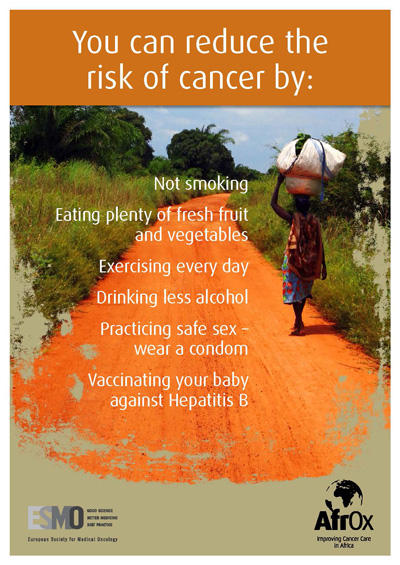
The biggest risk factors threatening our health today are blood pressure, tobacco, alcohol and poor diet; risk factors associated with chronic disease. The term ‘chronic’ conveys an important prospect: it means people will be spending more time living with disease. Simultaneously, cases of disability, whether due to disease or injury, will also spread exponentially. Although there is ample evidence available to provide a compelling argument in favour of the strengthening of health systems instead of solemnly targeting individual health areas and acute care, it seems donor-driven funding patterns do not allow this awareness to seep into the agendas of players in the field.
Without going into the power dynamics of money over policy there is a need for change. It is quite simple: changes in disease patterns means changes in care. We ought to be thinking about different approaches to health and healing. What does it mean to be living with disease/disability instead of merely suffering from it? What makes people crumble and what makes them cope?
Aaron Antonovsky, an American-Israeli sociologist, studied human resilience by looking into the cases of women that survived the Holocaust. Out of this group of women, only 29% appeared to be in good emotional health. Antonovsky was intrigued by how high this figure was, almost one third of women living through such a horrendous experience did actually have a positive outlook on life. This is what inspired him to formulate his sense of coherence theory.
People that have a strong sense of coherence during a difficult situation are able to comprehend, manage and derive meaning from troubling times. As such, they will experience less stress. And this is important. Stress is a major - if not one of the biggest - peril to health and healing. Reducing stress by having a strong sense of coherence can usually be prescribed to having understanding and perspective, resources and social capital. How a person is dealing with a disease will help shape its course.
Having a chronic affliction or a disability shakes the foundations of someone’s being. It changes the structures of daily life; our daily steps, habits and taken-for-granted certainties. As true as this may be for any disease, chronic conditions provide a much longer time-span to process these changes and learn to deal with them. During this process, social networks and institutions are relied on for support.
Diseases do not exist within a social vacuum. What causes disease to occur, spread and ultimately affect those involved is dependent on physical, psychological, social and environmental factors. Health care systems should therefore become more horizontal and integrative. Health issues are often interrelated; infectious diseases are entwined with chronic diseases. Some, such as HIV/AIDS are even hard to place under one banner, as therapeutic measures are increasingly becoming available worldwide.  We need health systems that are strong enough to accommodate a plethora of often unrelated health issues,, promote healing as well as coping, and that are open to wider social institutional involvement.  
Although this might seem a far stretch from what developing countries promptly need in terms of health care, shifting at least some of the focus towards building strong health care systems will be rewarded in the long haul. Surely initiatives to treat acute health problems remain relevant, as well as, for example, efforts to fight tobacco use and fast food intake. But if the focus is always on absence of disease and complete recovery, instead of the ability to cope with afflictions, we might overlook what is sometimes more important. In the end, the quality of health, as well as ill health, depends on the quality of care.


Carolien van Embden Andres has recently finished her Master’s programme in Medical Anthropology and Sociology at the University of Amsterdam.